New · first edition 2026Legal PhD Programme · FLA UW

A space for
academic, expert
and scholarly growth.

A three-year preparatory programme for candidates planning a doctoral dissertation in the extramural mode.

6

semesters

50+

permanent mentors

PQF 8

qualification level

2026

first edition

Academic mentoringResearch methodologyPQF 8Extramural modeFLA UW academic communityPractice × ScholarshipAcademic mentoringResearch methodologyPQF 8Extramural modeFLA UW academic communityPractice × ScholarshipAcademic mentoringResearch methodologyPQF 8Extramural modeFLA UW academic communityPractice × Scholarship
About the Programme

An individual pathway for preparing a doctoral dissertation.

Library of FLA UW

A fee-based preparatory programme for candidates intending to prepare a doctoral dissertation in the extramural mode — addressed to professionally active candidates, in particular practising lawyers.

The Programme is not a doctoral school and does not replace the proceedings for the award of the doctoral degree. Its completion confirms qualifications at level 8 of the Polish Qualifications Framework — corresponding to advanced research competences and the autonomous conduct of academic work.

Who is the Programme for?

The Programme is intended for holders of a master’s degree or an equivalent qualification who plan to prepare a doctoral dissertation in the legal sciences outside a doctoral school. We particularly welcome professionally active candidates, including advocates, attorneys-at-law, trainees, law-firm lawyers, public-administration officials, members of non-governmental organisations and other individuals interested in academic development in the legal sciences.

What does the Programme offer?

The Programme offers individual mentoring, methodological classes, thematic workshops and the opportunity to present the progress of one’s research within the academic community. The key element is cooperation with the mentor, covering in particular support in refining the dissertation topic, developing the research concept, planning the academic work, selecting research methods, organising the structure of the dissertation and analysing source materials. The mentor provides consultations, comments on the materials submitted, indicates possible directions for further work and conducts periodic assessments of the participant’s progress.

Duration

Six semesters (three years) of regular, individual work with a person providing mentoring on one’s own doctoral project — from refining the topic to preparation for doctoral proceedings.

Outcome

Confirmation of qualifications at PQF 8, a mature dissertation concept, a network of academic contacts and a tangible pathway of further development within the FLA UW community.

A space for research development

Academic mentoring
of the highest standard.

The Programme creates conditions for considered and orderly academic development. Participants receive support in research methodology, academic writing, the presentation of research results and the building of their own research trajectory within the FLA UW academic community.

01

Mentoring

Each participant in the Programme is assigned a mentor. The assignment takes account of the subject matter of the planned dissertation, the mentor’s specialisation and the number of participants under their supervision. The mentor supports the participant in work on the doctoral project, monitors progress and provides substantive consultations. Meetings are held no less frequently than once every two months — in the form of individual consultations, seminars or presentations of research results within a unit of FLA UW.

02

Academic development

Participants gain access to the extensive library and academic resources of one of the foremost faculties of law in Poland. This entails the opportunity to work within an environment in which research is conducted and in which seminars, conferences, expert debates and events are organised with the participation of representatives of scholarship, legal practice, public institutions and foreign partners. Participation in the Programme is also an opportunity gradually to engage with the academic life of the Faculty and of the University of Warsaw — to become acquainted with the academic community, to present one’s own research interests and to develop contacts useful in subsequent academic and professional work.

03

Methodological classes

Participants take part in classes supporting work on the doctoral dissertation — developing their research toolkit, organising methods of academic work and preparing them to conduct legal research autonomously. The programme envisages, in particular, classes on academic writing technique, the methodology of the legal sciences, research in the legal sciences, copyright law in academic work and the comparative method — in the form of lectures, seminars or workshops. One general session is planned per semester; the most important element of the programme remains individual work with the mentor.

Organisational information

Fees, schedule,
rules for assigning the mentor.

Fees

Two payment pathways

Year1st instalment2nd instalmentSingle payment
Year IPLN 5,000PLN 5,000PLN 9,000
Year IIPLN 4,500PLN 4,500PLN 8,000
Year IIIPLN 3,750PLN 3,750PLN 6,500

With single payment for each year, the aggregate cost of the full three-year cycle may be lower by PLN 3,000.

Admission schedule

First edition

  1. 01

    14.06.2026

    Opening of admission to the first edition of the Programme.

  2. 02

    18.10.2026

    Closure of the application period.

  3. 03

    01.11.2026

    Commencement of classes of the first edition.

Admission is conducted on a rolling basis. Candidates apply through the form available on the Programme’s website, providing basic personal data together with information on the planned area of research, prior professional or academic experience and their expectations regarding the programme.

Upon receipt of the application, the admissions committee carries out its assessment. Where appropriate, a person applying to the Programme may be invited to an admission interview. Notification of the admission decision is provided, as a rule, within 14 days of submission of the application.

Admission to the Programme is finalised following a positive assessment of the application, confirmation of the availability of mentoring and the signing of the participation agreement.

Mentor

Rules for the assignment of the mentor

In the application form, the candidate indicates the preferred method of mentor assignment. Three pathways are available. The final assignment takes place following a positive assessment of the application, confirmation of the availability of mentoring and agreement on the terms of participation in the Programme.

01

Selection from the list

The candidate reviews the profiles of the mentors, their specialisations and research areas, and then indicates the person with whom they would wish to work on the doctoral project.

02

Indication of a member of FLA UW staff

The candidate indicates a member of staff of FLA UW whose profile is not published on the Programme’s website. The Programme’s authorities contact the indicated person and ascertain whether they consent to providing mentoring.

03

Decision of the Programme’s authorities

A solution for those who have a defined area of interest but do not yet know who would be the best mentor. The Programme’s authorities propose the mentor best suited to the subject matter of the dissertation, the profile of the candidacy and staff availability.

Academic mentors

Discover the academic profiles of the mentors of the Programme.

Discover the academic profiles of the mentors of the Programme — experienced scholars from a wide range of fields of law.

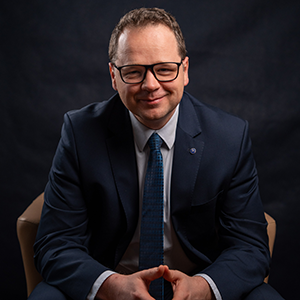
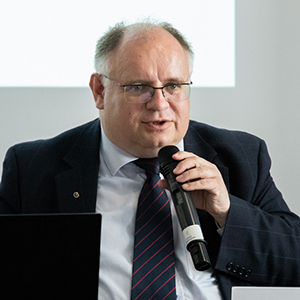
Piotr Grzebyk

dr hab. prof. ucz.

Piotr Grzebyk

Department of Labour Law and Social Policy

dr hab. prof. ucz.

Piotr Grzebyk

Department of Labour Law and Social Policy

I welcome those who wish to study labour law and employment law as fields that respond vividly to social, economic and technological change. I am particularly drawn to topics in collective labour law: trade unions, collective disputes, the right to strike, social dialogue and freedom of association.

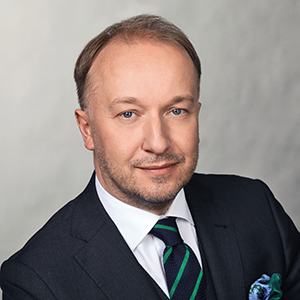
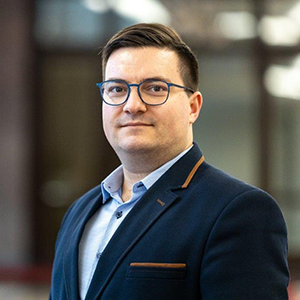
Rafał Stankiewicz

prof. dr hab.

Rafał Stankiewicz

prof. dr hab.

Rafał Stankiewicz

I welcome those interested in research on administrative law and administrative procedure, especially in their constitutional, European and regulatory dimensions. I am particularly drawn to questions concerning the relationship between the Constitution and administrative law, the principles of administrative law, judicial review of administration and contemporary models of economic regulation.

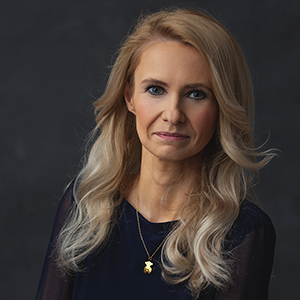
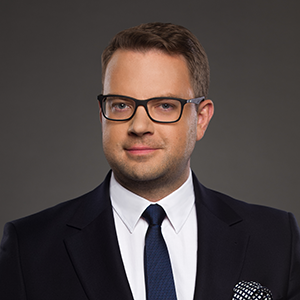
Dominika Wajda

dr hab.

Dominika Wajda

dr hab.

Dominika Wajda

I welcome those who wish to study commercial law, and in particular company law — a field of central importance for the development of the economy. I am especially drawn to topics concerning joint-stock companies, including specialised companies such as e.g.

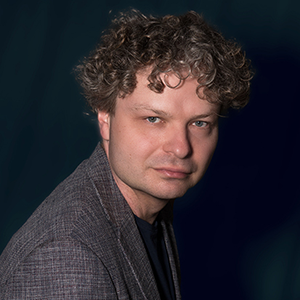
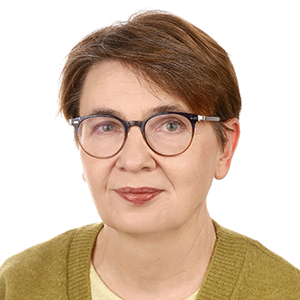
Marek Wierzbowski

prof. dr hab.

Marek Wierzbowski

prof. dr hab.

Marek Wierzbowski

The scope of my mentoring may cover administrative law, public economic law, as well as areas at the intersection of these fields, in particular within comparative law, and also emerging new areas such as the use of artificial intelligence.

Tatiana Chauvin

dr hab. prof. ucz.

Tatiana Chauvin

dr hab. prof. ucz.

Tatiana Chauvin

I welcome those interested in research on the philosophy and theory of law, the methodology of legal sciences and bioethics. I am particularly drawn to questions concerning human legal subjectivity, human dignity, procedural justice, the relationship between law and science, and the axiological foundations of public law.

Tadeusz Zembrzuski

dr hab. prof. ucz.

Tadeusz Zembrzuski

dr hab. prof. ucz.

Tadeusz Zembrzuski

* Civil procedure * Judicial enforcement * The system of the organs of the administration of justice

Aleksander Stępkowski

dr hab.

Aleksander Stępkowski

dr hab.

Aleksander Stępkowski

I welcome those interested in the cultural dimension of law and in the processes of its development, as well as the determining influence that philosophy and political thought exert upon it. My invitation is addressed in particular to those interested in the social impact of legal regulation and its cultural entanglements, and to those interested in comparative law who wish to pursue in-depth research in this field.

Jan Rudnicki

dr hab.

Jan Rudnicki

dr hab.

Jan Rudnicki

I offer mentoring to those interested in private law who wish to study it within a broad comparative and historical context. I am particularly interested in questions concerning the sources of private law, as well as in classical comparative topics focused on individual institutions of private law.

Witold Modzelewski

prof. dr hab.

Witold Modzelewski

prof. dr hab.

Witold Modzelewski

I invite those interested in tax law, above all in substantive tax law, the special part. I also welcome those interested in the theory of tax law and the economic analysis of public levies.

Wojciech Engelking

dr

Wojciech Engelking

dr

Wojciech Engelking

I welcome those interested in the place where law intersects with ideas concerning the organisation of society, the place of the human person within it, and history. I am happy to support projects on legal traditions, normative crises (in particular the notion of anomie) and the place of law in past and contemporary culture wars.

Leszek Bosek

prof. dr hab.

Leszek Bosek

prof. dr hab.

Leszek Bosek

I specialise in civil law (in particular issues of the general part, property law and the law of obligations), medical law, constitutional law (in particular the dogmatics of fundamental rights) and European law. I am the author of more than 160 academic publications, including monographs, commentaries, articles and case notes, and co-editor of the six-volume series System of Medical Law, published since 2017.

Adam Cezary Bosiacki

prof. dr hab.

Adam Cezary Bosiacki

prof. dr hab.

Adam Cezary Bosiacki

Issues in the history of law, including the history of political and legal doctrines in their classical understanding and in relation to the present, including questions of the most recent legal doctrines and ideas, mainly in the field of the management of public affairs, new technologies, territorial and corporate self-government, the law of Russia, the USSR and Central and Eastern European countries, supranational law, and the convergence of legal systems.

Jakub Chowaniec

dr

Jakub Chowaniec

dr

Jakub Chowaniec

I warmly invite cooperation from those interested in tax law, with particular emphasis on the taxation of the financial sector of the economy or the cultural sector, or on indirect taxation, including excise duty. Alternatively, my interests extend to aspects of the financial law of the former USSR states and broadly understood comparative tax law.

Krzysztof Koźmiński

dr hab. prof. ucz.

Krzysztof Koźmiński

dr hab. prof. ucz.

Krzysztof Koźmiński

I invite cooperation from those interested in economic-legal issues, especially: regulatory impact assessment, the application of the economic analysis of law in legislation and in the process of applying the law, banking law and the regulation of the financial market — as well as those who intend to study law from the perspective of other areas of social knowledge: economics, sociology, philosophy, the history of ideas. My academic work concerns the economic analysis of law (law & economics), legisprudence, constitutional and administrative law, and the theory and philosophy of law.

Ewa Wojtaszek-Mik

dr hab.

Ewa Wojtaszek-Mik

dr hab.

Ewa Wojtaszek-Mik

I invite cooperation from those who would wish to conduct research under my supervision in civil law, especially its general part and the law of obligations, including a broad spectrum of issues in contract law, from the conclusion of contracts, through their performance, to the termination of the legal relationship. I deal with contracts in professional, consumer and general transactions, including both those regulated in the Civil Code (e.g.

Piotr Kładoczny

dr

Piotr Kładoczny

dr

Piotr Kładoczny

I am particularly drawn to topics within substantive criminal law, criminal procedure and human rights. I am glad to support those who wish to deepen their knowledge in drug law, preventive measures, offences consisting in the abuse of freedom of expression, as well as miscarriages of justice and the right to a fair trial.

Sławomir Lewandowski

dr hab. prof. ucz.

Sławomir Lewandowski

dr hab. prof. ucz.

Sławomir Lewandowski

My areas of academic interest within the discipline of law include: legal argumentation, legal logic, the theory of law and legislative technique. Although the dominant layer of my research is theoretical-legal in character, I always endeavour for it to be the theory of law broadly understood, not self-enclosed.

Jan Podkowik

dr hab.

Jan Podkowik

dr hab.

Jan Podkowik

I welcome those interested in constitutional law — both in its classical dimensions and in areas bordering on other branches of law. I am drawn to questions concerning the impact of the constitution on various institutions of the legal system, with particular emphasis on civil law and civil procedure and on the judicial application of law.

Krzysztof J. Kaleta

dr

Krzysztof J. Kaleta

dr

Krzysztof J. Kaleta

I conduct research in the theory and philosophy of law and in constitutional law. My research interests focus on philosophical-legal problems of contemporary constitutionalism, in particular such issues as: the rule of law, constitutional adjudication, and the enactment and amendment of the constitution.

Maria Supera-Markowska

dr

Maria Supera-Markowska

dr

Maria Supera-Markowska

I welcome those interested in conducting academic research in tax law, financial accounting and the law of public finance. I am particularly drawn to issues concerning income taxes and financial accounting, although my research interests also extend to other taxes and to selected problems of public finance.

Aleksander Grebieniow

dr hab.

Aleksander Grebieniow

dr hab.

Aleksander Grebieniow

I invite cooperation from those interested in the foundations of contemporary private law, in particular from a comparative and historical-comparative perspective. I deal with issues of the so-called

Dawid Sześciło

dr hab.

Dawid Sześciło

dr hab.

Dawid Sześciło

Problems of the organisation and functioning of the contemporary state and public administration at all its levels — from the supranational, through government administration, to territorial self-government; processes of governance and public management, with particular emphasis on public participation and network governance; issues of open government, access to public information and open data; the organisation of selected public service systems, especially healthcare and education.

Rafał Cieślak

dr

Rafał Cieślak

dr

Rafał Cieślak

I invite cooperation from those interested in the law of public contracts and in the law of territorial self-government. In particular — in theory and in practice — the following areas of research are close to me: public procurement, public-private partnership, EU funds, energy efficiency, the structure and finances of territorial self-government units.

Michał Bałdowski

dr

Michał Bałdowski

dr

Michał Bałdowski

I welcome those interested in researching economic administrative law, in particular capital market law, energy law and issues related to financial market regulation. I am particularly drawn to topics in capital market regulation: issuers' disclosure obligations, investor protection, cross-listing and supervision of the capital market.

Adam Szafrański

dr hab. prof. ucz.

Adam Szafrański

dr hab. prof. ucz.

Adam Szafrański

* Public economic law * Energy law * Energy transition

Marek Zubik

prof. dr hab.

Marek Zubik

prof. dr hab.

Marek Zubik

* theory of constitutionalism * constitutional principles of the state * parliamentary law * constitutional aspects of public finance * constitutional adjudication * theory and protection of human rights * theory of transitional justice and militant democracy

Cezary Błaszczyk

dr hab.

Cezary Błaszczyk

dr hab.

Cezary Błaszczyk

I can offer support in particular to those preparing doctoral dissertations devoted to broadly understood animal protection law and to the legal, ethical and political status of animals. I also welcome, however, cooperation from those undertaking other topics in the field of political and legal doctrines.

Karol Karski

prof. dr hab.

Karol Karski

prof. dr hab.

Karol Karski

Public international law and the law of the European Union

Karol Weitz

prof. dr hab.

Karol Weitz

prof. dr hab.

Karol Weitz

Civil procedure with particular emphasis on international and European civil procedural law and arbitration

Magdalena Błaszczyk

dr hab.

Magdalena Błaszczyk

dr hab.

Magdalena Błaszczyk

I welcome those who wish to study broadly understood criminal law, with particular emphasis on substantive regulation. I am particularly drawn to topics in economic criminal law, fiscal criminal law and the law of misdemeanours.

Paweł Borecki

dr hab. prof. ucz.

Paweł Borecki

dr hab. prof. ucz.

Paweł Borecki

I invite academic cooperation from those interested in the law on religion and religious policy. This concerns current matters, but also the history of the law on religion and religious policy in the Polish lands.

Adam Opalski

prof. dr hab.

Adam Opalski

prof. dr hab.

Adam Opalski

I welcome those interested in company law and commercial law, especially in the dimension of the transformations that have occurred in recent years in connection with the development of technology, the needs of start-up companies and modern forms of M&A transactions and company financing. I am particularly drawn to issues of corporate finance, corporate governance and international and EU company law.

Miłosz Kłosowiak

dr

Miłosz Kłosowiak

dr

Miłosz Kłosowiak

I welcome those who wish to study administrative law, including public economic law, as well as administrative procedure and proceedings before administrative courts. These are branches of law with an extraordinarily broad regulatory scope and of significant importance both for the functioning of the state and for individuals.

Barbara Namysłowska-Gabrysiak

dr hab.

Barbara Namysłowska-Gabrysiak

dr hab.

Barbara Namysłowska-Gabrysiak

My areas of academic interest include criminal law, feminist legal theory, in particular of criminal law, including issues concerning, among other matters, broadly understood violence against women, reproductive rights, the offence of trafficking in human beings and hate speech. In addition, my academic interests include the issue of the criminal liability of legal persons and the methodology of clinical legal education.

Dobrochna Bach Golecka

dr hab. prof. ucz.

Dobrochna Bach Golecka

dr hab. prof. ucz.

Dobrochna Bach Golecka

Academic supervision in the field of European Union law, in particular medical law, administrative law, social rights, feminism, fundamental rights in the EU, EU institutions and procedures, EU decision-making and governance, EU citizenship and theory of democracy, and analysis of the case-law of the CJEU.

Filip Elżanowski

dr hab.

Filip Elżanowski

dr hab.

Filip Elżanowski

I welcome those interested in researching energy law and the regulatory and administrative aspects of the energy transition. I am particularly drawn to issues related to the functioning of the energy sector, the development of renewable energy sources, energy security and the legal context of climate policy and decarbonisation.

Anna Zientara

dr hab.

Anna Zientara

dr hab.

Anna Zientara

I will undertake cooperation with those interested in conducting academic research in substantive criminal law. I am particularly drawn to topics related to offences and misdemeanours against property and economic transactions.

Magdalena Bławat

dr

Magdalena Bławat

dr

Magdalena Bławat

I invite cooperation from those interested in issues in the general part of civil law and in the law of obligations, especially broadly understood contract law. I am glad to support projects involving comparative legal research.

Tomasz Stawecki

dr hab. prof. ucz.

Tomasz Stawecki

dr hab. prof. ucz.

Tomasz Stawecki

I invite those graduates of law who are not satisfied with thinking about law solely in terms of hierarchical sets of enacted-law norms. In other words, I am more interested in "law in action" than "law in books".

Karolina Wojciechowska

dr

Karolina Wojciechowska

dr

Karolina Wojciechowska

I welcome those interested in administrative matters — administrative law, administrative procedure and proceedings before administrative courts. I am particularly interested in research on spatial planning and development, and on building law.

Sławomir Żółtek

dr hab. prof. ucz.

Sławomir Żółtek

dr hab. prof. ucz.

Sławomir Żółtek

I welcome those interested in researching criminal law and the law of new technologies as fields responding dynamically to social, economic and technological change. I am particularly drawn to issues of economic criminal law, liability for economic and financial crimes and the functioning of mechanisms protecting economic transactions.

Krzysztof Szczucki

dr hab.

Krzysztof Szczucki

dr hab.

Krzysztof Szczucki

The area of mentoring covers above all substantive criminal law, with particular emphasis on the issue of criminal liability, the principles of criminalisation and contemporary directions of development of criminal law. I also specialise in medical law, including issues of legal liability connected with the practice of medical professions, the protection of patients' rights and the limits of permissible medical intervention.

Marcin Stębelski

dr

Marcin Stębelski

dr

Marcin Stębelski

Constitutional law, including mainly questions of human rights, the theory of the constitution, constitutional adjudication, parliamentary law and issues of family law in a constitutional perspective. I also deal with the functioning of the authorities, in particular the judiciary, and with the relations between domestic law and European law from a constitutional perspective.

FAQ · 22 questions

Everything worth knowing before applying.

A complete list of answers — grouped by theme, with a search function.

Have not found the answer? Write to the Secretariat.

05

No. The Programme is not a doctoral school within the meaning of the Act — Law on Higher Education and Science. It is a separate, fee-based form of education preparing participants to work on a doctoral dissertation and, where applicable, to apply for the award of the doctoral degree in the extramural mode. Thanks to this status, the curriculum can be more flexible and better suited to professionally active candidates.

No. Completion of the Programme does not automatically result in the award of the doctoral degree. The Programme is not a “doctorate-in-a-package”. It is, however, a structured pathway of support intended to help the participant develop the concept of the dissertation, refine their research methodology, work with a mentor and reach a stage at which the formal initiation of doctoral proceedings becomes a well-considered decision.

The full cycle of the Programme lasts six semesters, i.e. three years. This duration allows the participant to progress through successive stages of doctoral work: from refining the topic, through preparing the conceptual framework and outline of the dissertation, to developing selected parts of it and preparing for the formal initiation of doctoral proceedings.

Yes. Completion of the Legal PhD Programme at the Faculty of Law and Administration of the University of Warsaw confirms qualifications at level 8 of the Polish Qualifications Framework (PQF 8). The PQF is a national system for describing qualifications. It organises qualifications across 8 levels and describes them through three categories: knowledge, skills and social competences. The PQF level therefore indicates how advanced the learning outcomes associated with a given qualification are. In practice, PQF 8 is the highest level in the system. It is associated with highly advanced research competences: the autonomous formulation of academic problems, the conduct of research, the critical analysis of sources, the development of original solutions and responsible participation in academic life. Within the higher education system, level VIII of the PQF is the level proper to doctoral qualifications. For the participant, this means that the Programme is not a routine continuing-education course. It is a pathway of work at the highest academic level, designed for those who wish to develop as autonomous and mature experts in their field of law. At the same time, it must be remembered that the completion of the Programme and the confirmation of learning outcomes at PQF 8 are not equivalent to the award of the doctoral degree. The doctoral degree may be awarded solely through separate doctoral proceedings.

Yes — this is the fundamental purpose of the Programme. The award of the doctoral degree cannot be guaranteed, as it depends on the quality of the dissertation, the participant’s independent work and the outcome of separate doctoral proceedings. The Programme does, however, significantly increase the likelihood that work on the dissertation will be conducted in an orderly, methodologically conscious manner, with regular consultation with an experienced mentor.

Contact

Take the first step towards the doctorate.

We are at your service during the opening hours of the Programme’s Secretariat.

FLA UW · PhD Programme

Collegium Iuridicum I

ul. Krakowskie Przedmieście 26/28

00-927 Warsaw

studium-doktorskie@wpia.uw.edu.pl

Mon–Fri: 9:00 a.m. – 4:00 p.m.

Maximum 1000 characters. Remaining: 1000

Upon receipt of the application, the admissions committee will carry out its assessment. Where appropriate, a person applying to the Programme may be invited to an admission interview.

Location

Where to find us

Seat of the Programme
Legal PhD Programme
Faculty of Law and Administration, University of Warsaw
Collegium Iuridicum I
ul. Krakowskie Przedmieście 26/28
00-927 Warsaw