About the Faculty
History of the Faculty

Two centuriesin the serviceof Polishlaw.

From the 18th-century Knights' School, through the Main School and the clandestine tuition of the occupation years, to the modern Collegia — the oldest faculty of the University of Warsaw.

This is a history in which law was never mere theory. Every decade has inscribed in our Faculty names, places and decisions that have shaped Polish legal thought.

01  Origins02  Main School and UW03  War04  Present day05  The Faculty in numbers
01 — Origins

The dates that built the Faculty.

The traditions of the Faculty reach back to the eighteenth century and to the curriculum taught at the Knights' School. Plans to establish a university educating jurists emerged in the wake of the First Partition — the Commission of National Education issued a number of professorial appointments, yet financial and logistical difficulties prevented their realisation.

  1. 0118th c.
    Corps of Cadets (Knights' School)
    The beginnings of legal education in Warsaw
  2. 021808
    School of Law of the Duchy of Warsaw
    The date recognised as the founding of the Faculty
  3. 031816
    Faculty of Law and Administration
    Part of the Royal University of Warsaw
  4. 041862
    Main School (Szkoła Główna)
    The largest of the four faculties
  5. 051915
    University of Warsaw
    The Faculty as the first faculty of the re-established Polish UW
  6. 061939–45
    Underground teaching
    Approximately 1,000 students under German occupation
  7. 071998
    Lipowa 4
    New teaching building (Collegium Iuridicum II)
  8. 082011
    Collegium Iuridicum IV
    Opening of the modern seat

In 1808 the School of Law of the Duchy of Warsaw was founded, principally to serve the needs of the judiciary and the new administration then being established. It is this date that is conventionally taken as the beginning of the Faculty's activity. In 1811, through a merger with the School of Administrative Sciences, the two-faculty School of Law and Administration was created. Its Board of Trustees included, among others, Stanisław Staszic and Samuel B. Linde.

In 1814 the office of Dean was introduced, with the distinguished legal historian Jan Wincenty Bandtkie elected first to hold it. The School continued its work uninterrupted even during the war with Russia. Transformed by the founding charter of 1816 into the Faculty of Law and Administration, it became part of the Royal University of Warsaw, formally inaugurated on 14 May 1818.

Among the professors of the Faculty were Fryderyk Skarbek, Wacław Aleksander Maciejowski and Romuald Hube. The Faculty took an active part in the scholarly life of Warsaw — publishing the journal Themis Polska (1828–1831).

Activity was suspended during the November Uprising, and many academic staff and students took part in the fighting. As part of the post-Uprising reprisals, the University was closed on 19 November 1831. Between 1840 and 1846 only legal courses attached to the Warsaw gubernial gymnasium were permitted to function.
02 — Main School and UW

The return of Polish scholarship.

In the reforming climate of the 1860s the Russian authorities consented in 1862 to the establishment of the Main School (Szkoła Główna). The largest of its four faculties was the Faculty of Law and Administration.

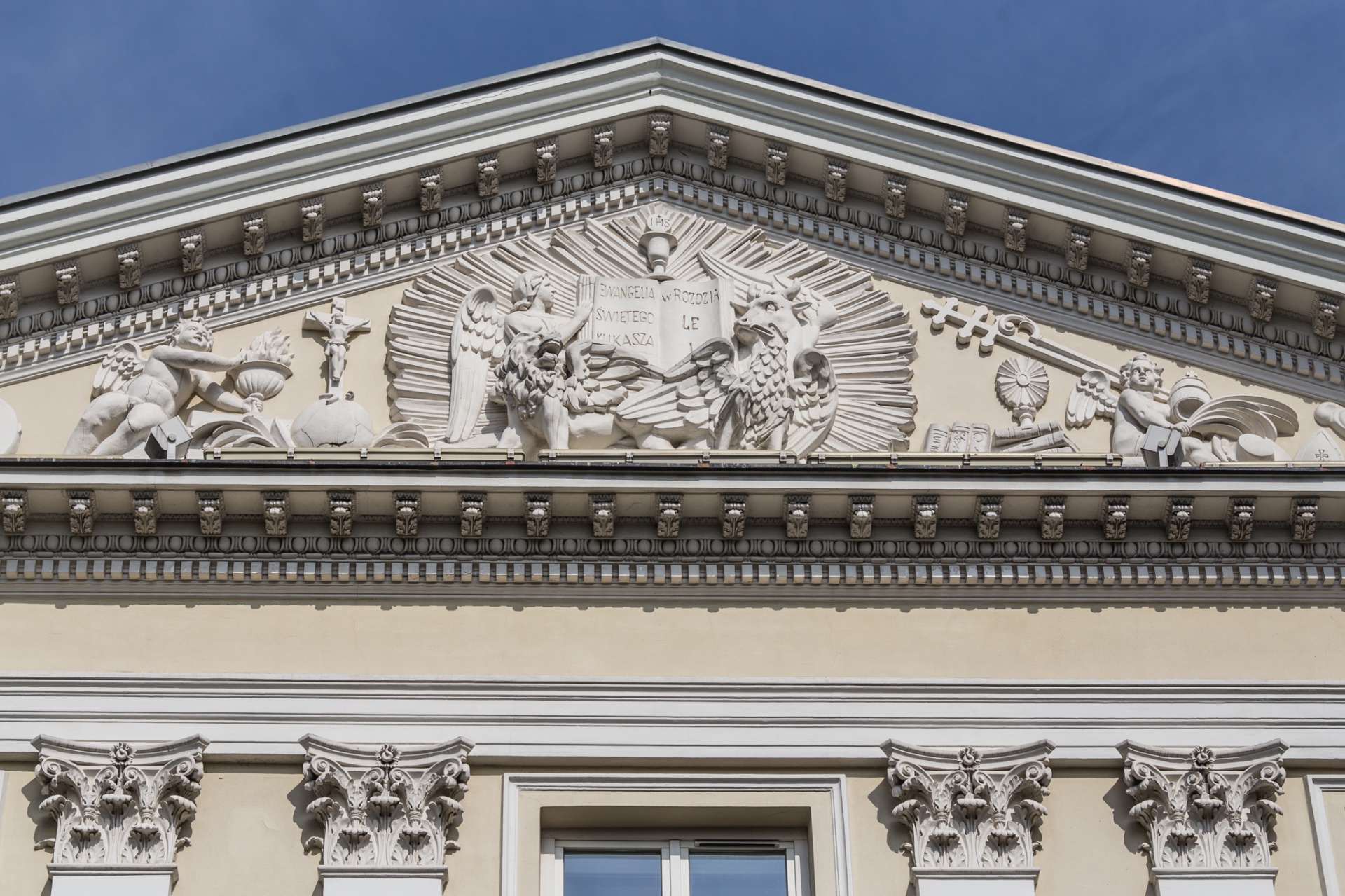
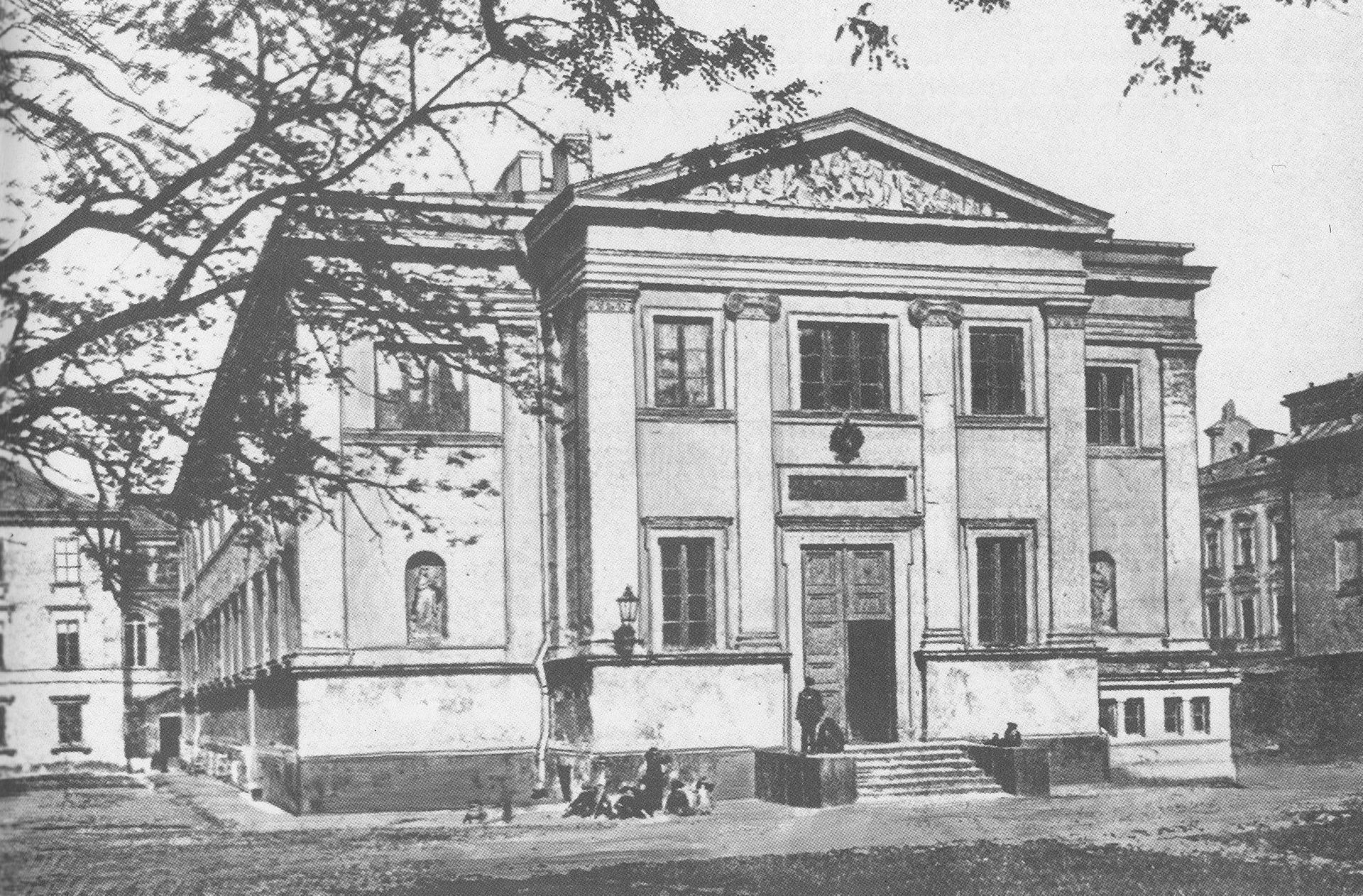
Historic edifice of the Faculty
01Historic edifice of the Faculty
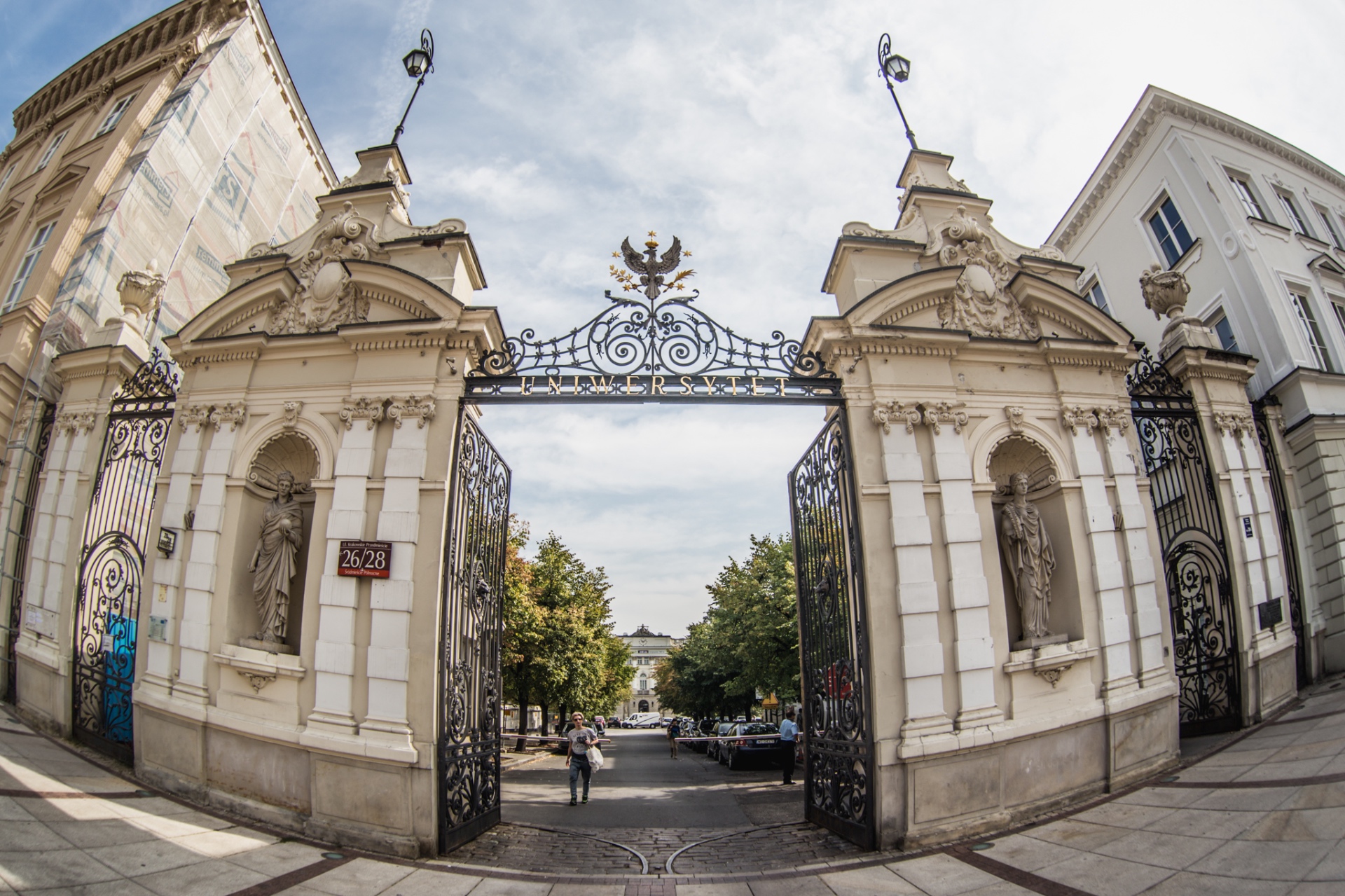
UW Gate — Krakowskie Przedmieście
02UW Gate — Krakowskie Przedmieście
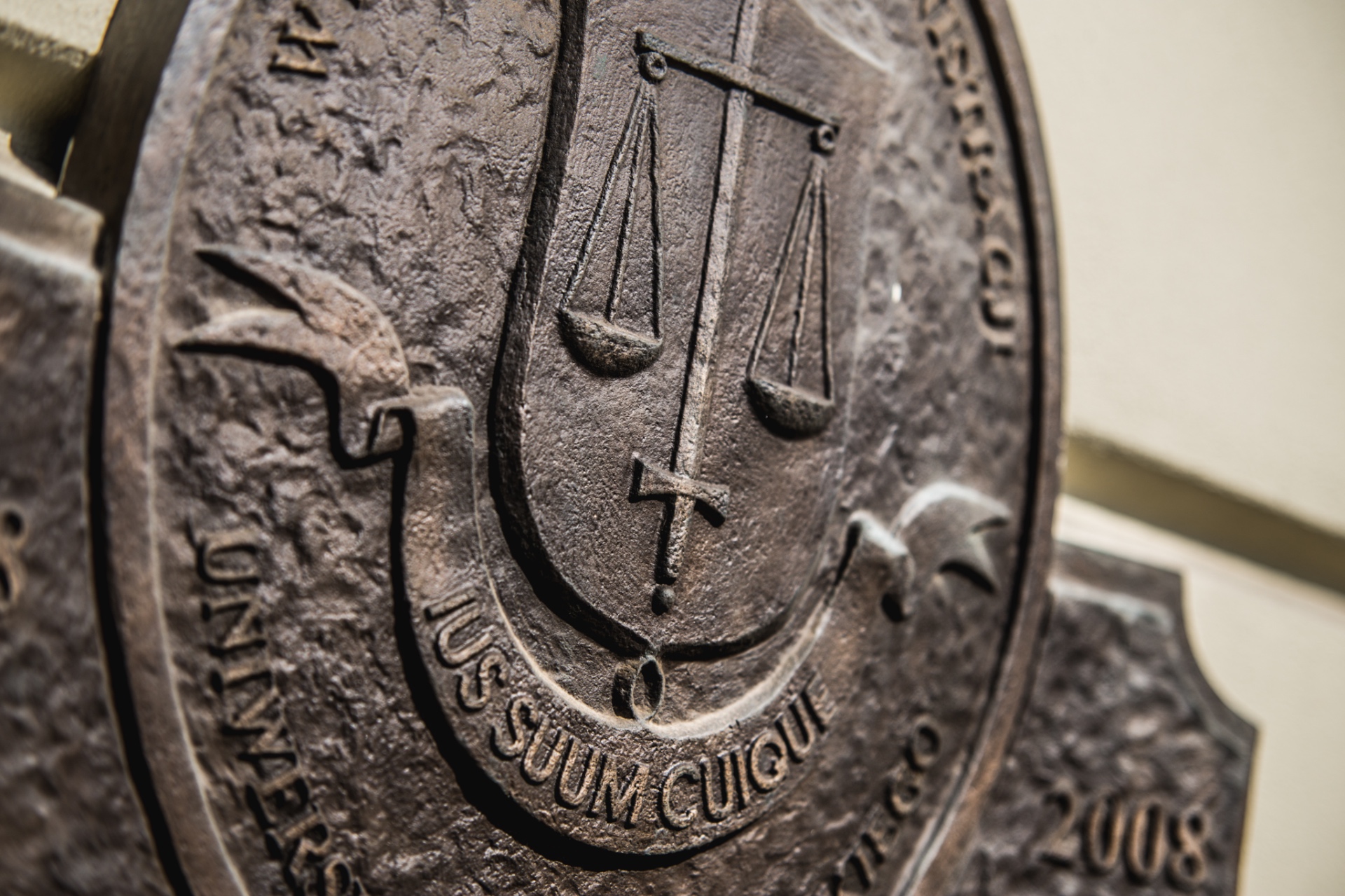
Jus suum cuique
03Jus suum cuique
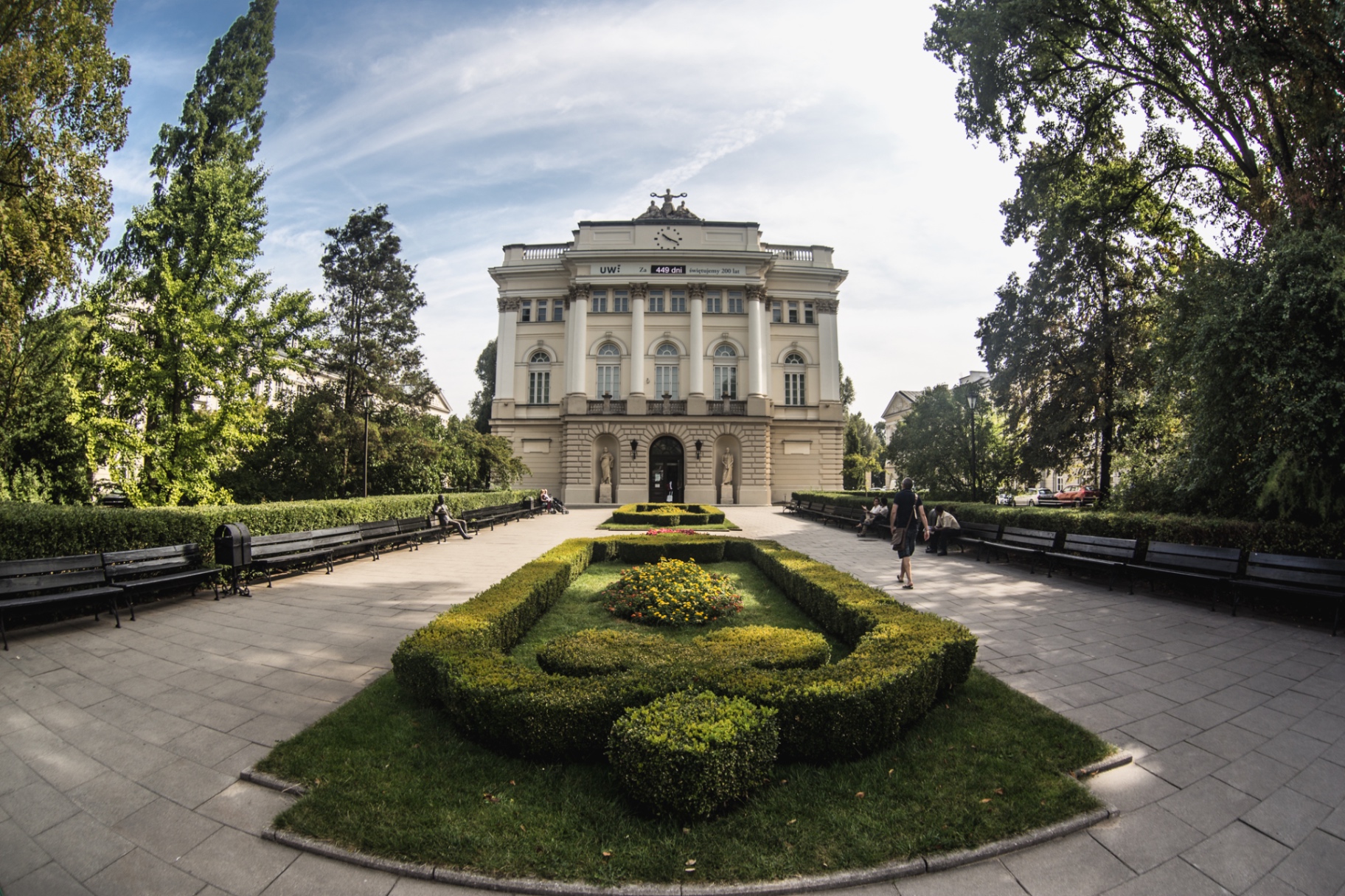
University courtyard
04University courtyard
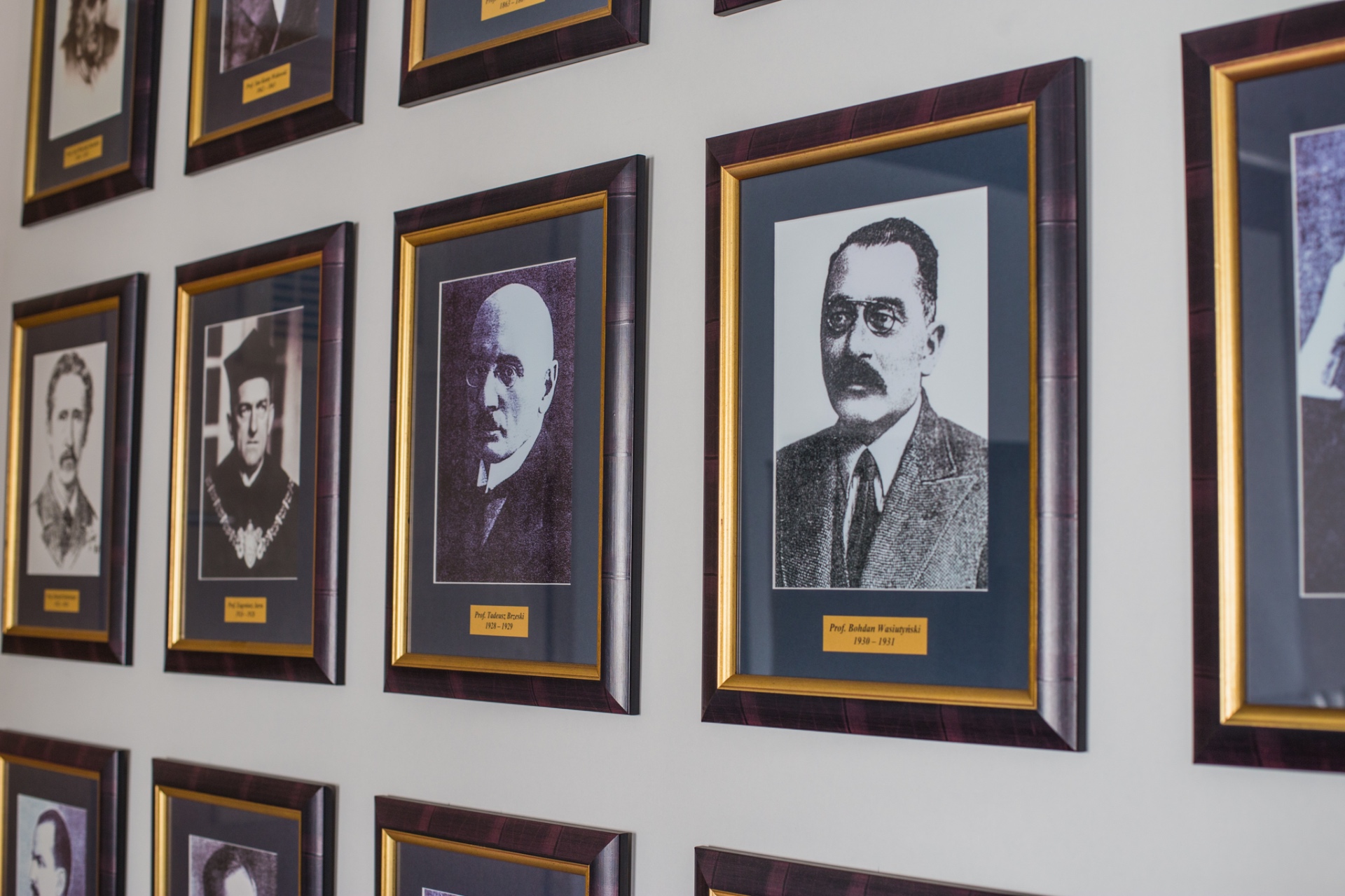
Gallery of the Deans
05Gallery of the Deans

1862 · Main School

Professors: Budziński, Miklaszewski, Dydyński, Holewiński, Okolski. In the course of its seven years the Faculty awarded 318 master's degrees from among 1,314 enrolled students.

1915 · University of Warsaw

On 15 November 1915 the University of Warsaw was re-opened. Its first faculty was the Faculty of Law and Political Sciences — its first dean, Alfons Parczewski, an alumnus of the Main School.

1930s — 2,000+ students

In the interwar period the Faculty admitted between 2,000 and 3,000 students. In 1935/36 a new building of the Faculty of Law was opened together with the Auditorium Maximum.

From the turn of 1869/1870 the Main School was succeeded by a purely Russian Imperial University. Despite the failure of attempts to revive a Polish university in 1905–1907, work to that end was resumed during the First World War, in 1914.

In the interwar years the Chair of Sociology of Law was held by Professor Leon Petrażycki, and the Chair of the History of Social Systems by Professor Ludwik Krzywicki. From 1921 the Chair of Public Finance was occupied by Roman Rybarski, who became Dean in 1937/38. From 1932 Professor Henri Mazeaud of the University of Lille delivered lectures on French civil law.

03
03 — 1939–1945

War and clandestine teaching.

In September 1939 the seminar building of the Faculty of Law was destroyed by fire. The Auditorium Maximum was requisitioned by the German army. Already in October the heads of the institutes confirmed to Dean Rybarski that teaching could resume as soon as substitute premises were secured — yet the German authorities issued a ban on the activity of all institutions of higher learning.

From the autumn of 1940 instruction was resumed for senior-year students under the direction of Dean Rybarski. When he was arrested in May 1941, teaching was briefly suspended — but as early as July 1941 it was reinstated under the protection of Professor Rafacz as Dean of the Faculty of Law of the University of Warsaw.

Small groups were formed in various premises across the city, and professors repeated their classes several times over. The Faculty of Law was the only faculty in which the Faculty Council convened regularly. The Warsaw Uprising interrupted the course of instruction; Dean Rafacz perished in August 1944, executed by the Germans.

≈1,000
students of the underground programme
"The Faculty of Law was the only faculty in which the Faculty Council convened regularly."
04 — After 1945

The Faculty today.

In July 1945 instruction was resumed in accordance with the pre-war curriculum. The professorial body grew steadily. By 1950 all chairs were fully staffed and new ones were established — statistics, history of Western European law, military law, ancient law, criminology. Today the Faculty operates a structure of 35 chairs.

Structure and teaching

Five years. Thirty-five chairs.

Among the post-war professorial body were: the Romanist Rafał Taubenschlag; the historian Karol Koranyi; the criminal lawyers Stanisław Śliwiński, Jerzy Sawicki, Igor Andrejew, Leszek Lernell and Stanisław Batawia; the civil lawyers Jan Wasilkowski, Seweryn Szer and Witold Czachórski; and, in public international law, Cezary Berezowski, Manfred Lachs and Wojciech Góralczyk.

  • 35 chairs
    covering all key branches of law and administration
  • Studia Iuridica
    47 volumes of the series continuing Themis Polska (1828)
  • Unified curriculum
    full-time and part-time law studies — the only such programme in Poland
  • Master's degree (Magister)
    five-year integrated studies concluded with the defence of a thesis
  • Admissions
    since 2006 — based exclusively on secondary-school leaving examination results
Opening to the world

Seven centres. The first in Europe.

Since 1992 the Faculty has operated the first Centre for English Law Studies in Europe. Alongside it: the Centre for French and European Law, the Centre for German and European Law, the School of American Law, the School of Italian and Spanish Law, the School of Polish Law for Foreigners, and the School of Chinese Law.

  • Centre for English Law Studies
    the first such centre in Europe — established 1992
  • Centre for French and European Law
    in cooperation with French partner universities
  • Centre for German and European Law
    partnership with German universities
  • School of American Law
    in cooperation with American partner universities
  • School of Italian and Spanish Law
    as well as the School of Polish Law for Foreigners
  • School of Chinese Law
    comprehensive instruction in Chinese law

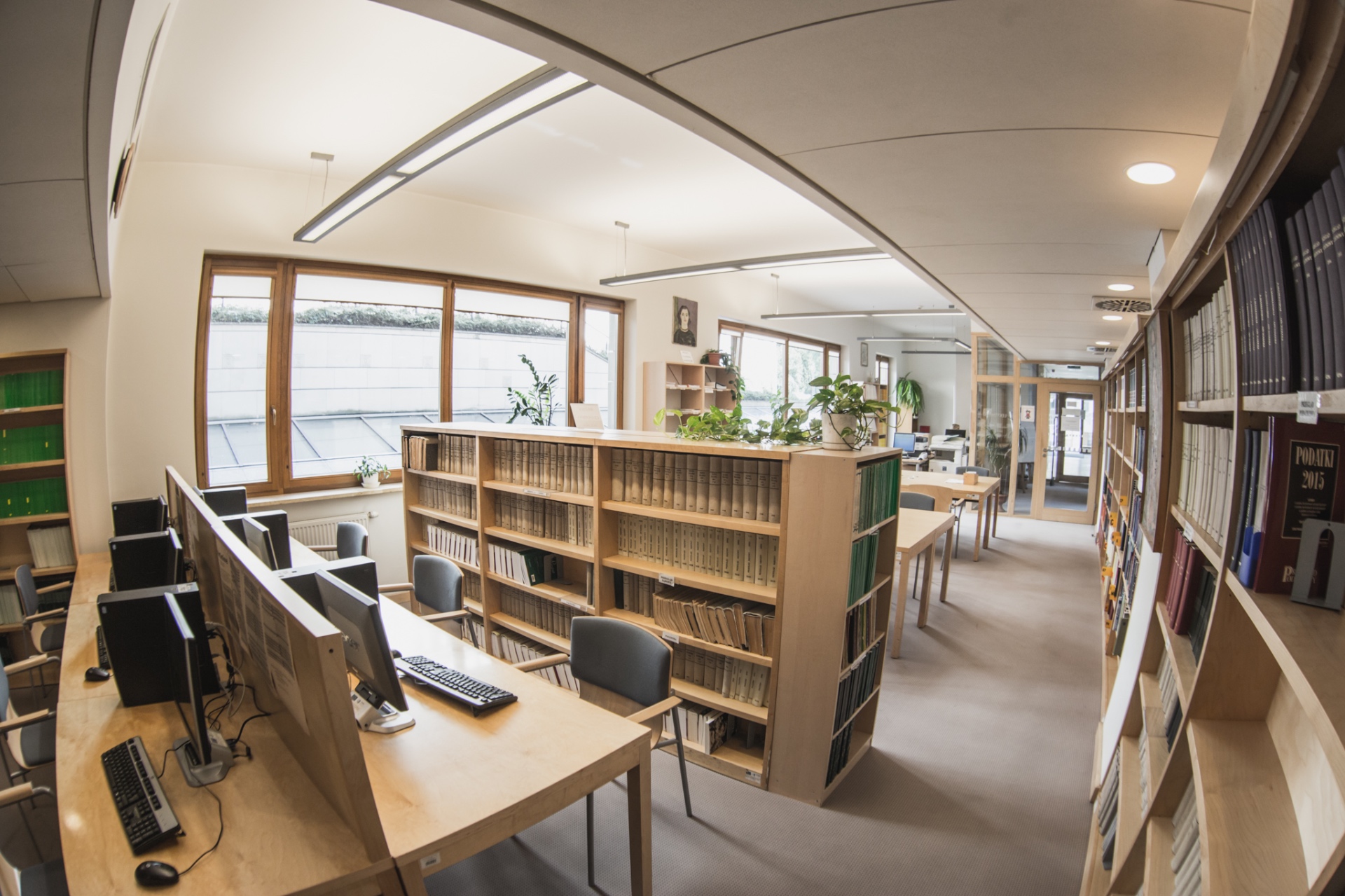
After the Second World War the Faculty had no premises of its own. The Seminar Building, once renovated, was made available only at the close of the 1940s. From the 1990s onward an investment programme was launched: in October 1998 classes commenced at Lipowa 4, and the building at ul. Oboźna (Collegium Iuridicum III) was erected to house the Institute of Public Law and the Faculty Library.

In 2010 the comprehensive renovation of Collegium Iuridicum I was completed, and in 2011 Collegium Iuridicum IV at Wybrzeże Kościuszkowskie 47 was opened. The Faculty's professors play an active role in international academic life — at the Hague Academy of International Law and through cooperation with the International Faculty of Comparative Law in Amsterdam.

·
Interlude — The Faculty today

Walls and people.

The history of this place does not end in the archives. Each day it is written anew by a fresh generation — on the way to the lecture hall, on the staircases of the Collegium, in the foyer between classes.

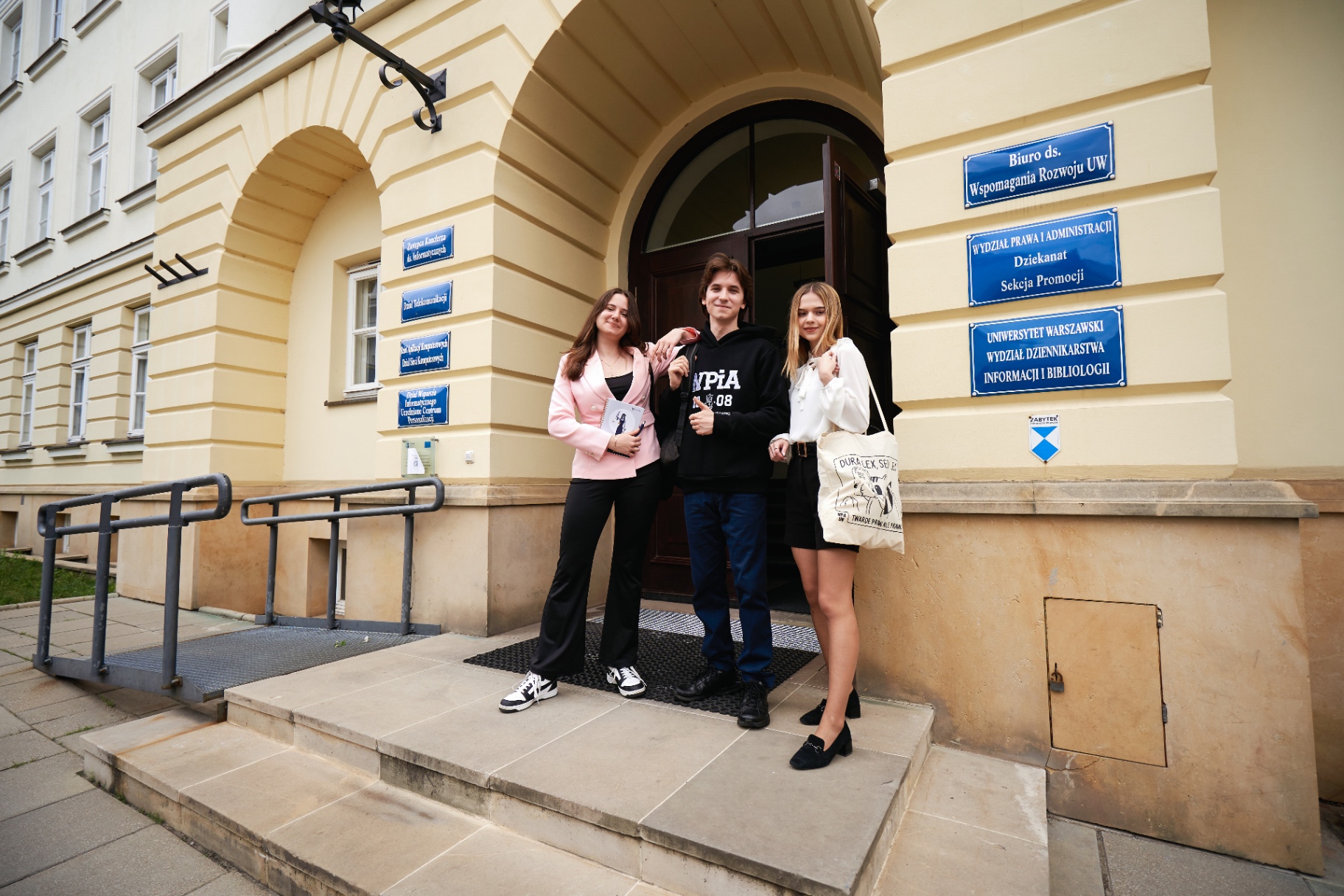
Students in front of the Faculty of Law and Administration UW
06 · EntranceWhere every day begins.
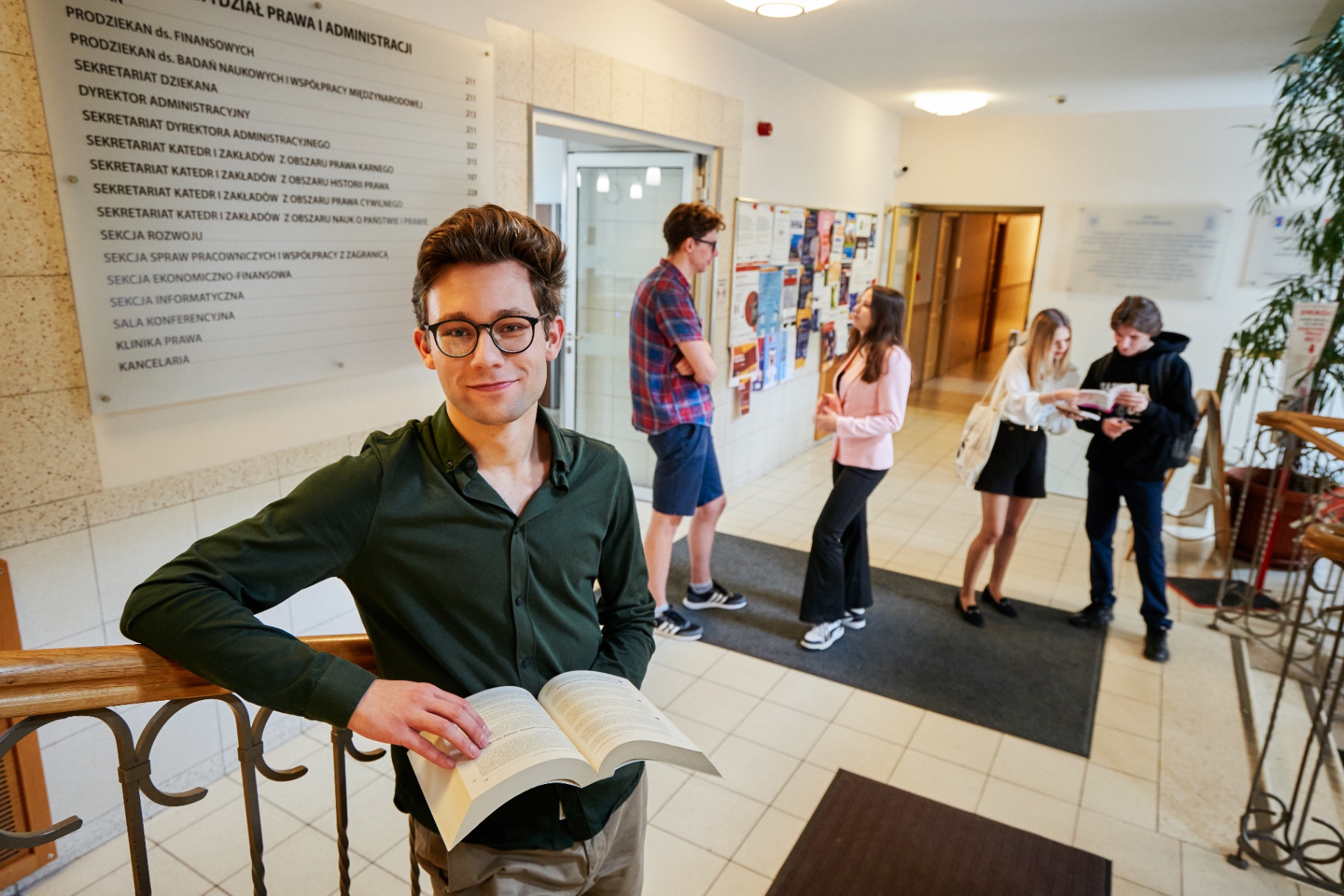
Student in the foyer of the Faculty of Law and Administration UW
07 · FoyerBetween lectures.
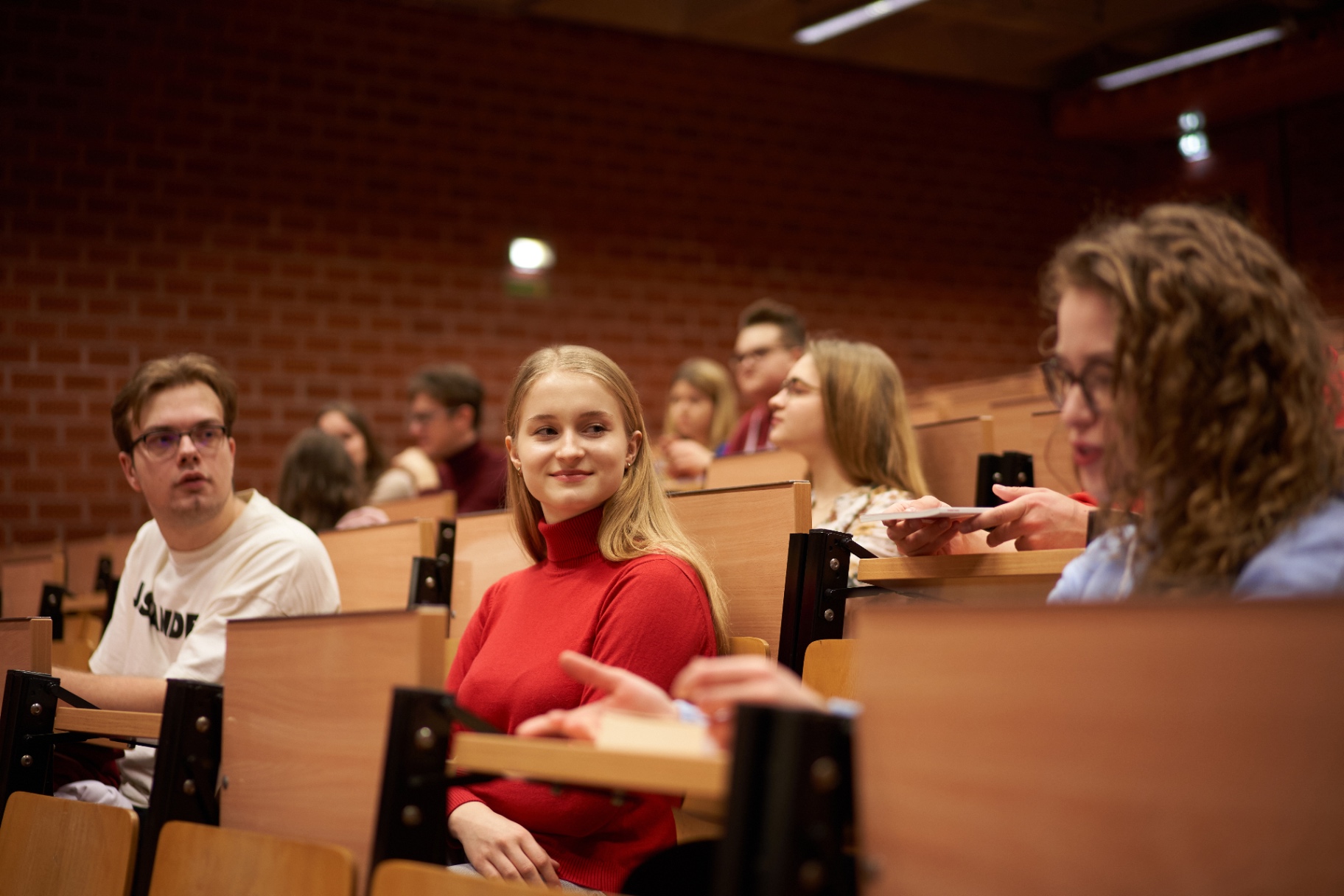
Students in the lecture hall of the Faculty of Law and Administration UW
08 · Lecture hallFive thousand. One community.
05 — The Faculty today

The figures that speak for themselves.

Two centuries of unbroken endeavour have produced an institution in which heritage and modernity meet — the oldest faculty of the University of Warsaw, open to the world, and still the largest centre of legal scholarship in Poland.

1808
year of foundation
35
chairs
230
academic teachers
5,000
students
47
volumes of Studia Iuridica
7
centres of foreign law
What lies ahead

At least two further centuries of Polish legal thought

Based on a text by Professor Grażyna Bałtruszajtys.